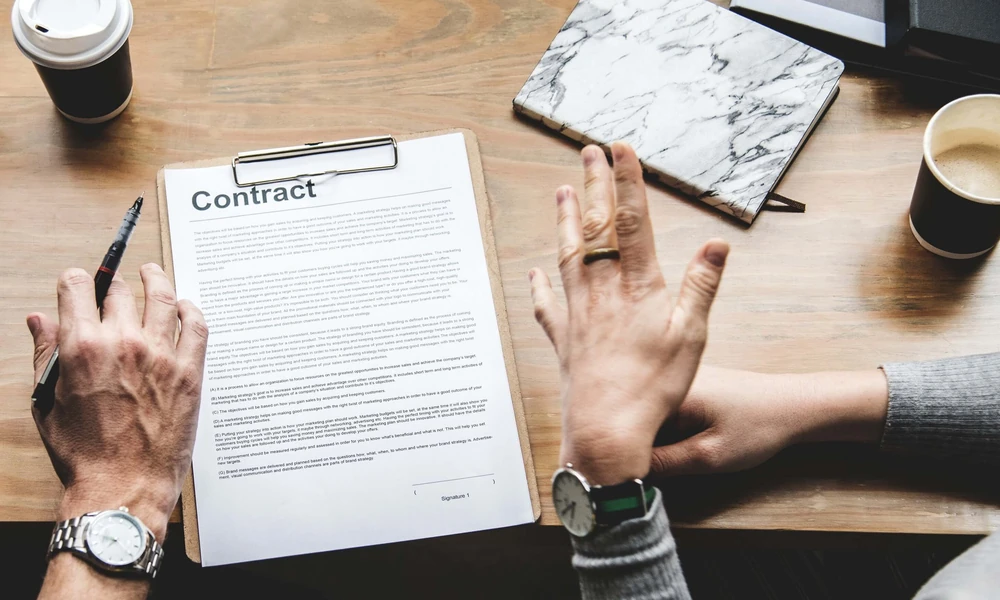
A growing number of businesses are using AI tools such as Gemini, Claude, and ChatGPT to help them run their daily operations and perform tasks such as data entry, email marketing, and contract drafting. But despite AI’s efficiency, it’s important to recognize that using a tool to generate a document such as a contract doesn’t mean your business is protected.
Contracts are legal instruments, and the consequences of the words written within them can be catastrophic for businesses, both financially and legally. While AI can give you the framework upon which to base a contract, using the services of an experienced corporate lawyer in Edmonton to review it before it is signed is often a worthwhile investment, and here’s why:
AI blind spots that can be problematic for contract drafting
Because AI language models cannot always interpret and apply the law accurately, the wording they generate may lead to a number of potentially problematic blind spots, including:
· Confusion over jurisdiction
Because AI may draw on legal information from different jurisdictions, a contract drafted using AI may reference incorrect governing laws that don’t apply in Canada.
· Failure to understand specific circumstances
A lack of understanding of your industry, your relationship with the other party, or what it is that you’re aiming to achieve can easily lead to errors.
· A lack of accountability
AI tools are not licensed lawyers and do not carry the same professional duties or insurance as a licensed business lawyer.
· Terms that sound plausible but aren’t enforceable
If challenged in court, some AI-drafted clauses may not hold up to scrutiny.
· Information that’s outdated
AI may not always be able to keep up with the fast pace at which legislation changes; lawyers are trained to stay informed about relevant legal developments.
At the end of the day, AI can provide you with the language to draft a contract, but a corporate lawyer can help ensure that it is legally sound and protects your interests.
Potential risks associated with AI-drafted contracts
Using AI alone to draft a contract can leave your business exposed to the following common risks:
· Clauses that are unenforceable – AI may use terms that are too vague or non-compliant to be upheld.
· Payment terms that aren’t clear – ambiguity regarding timing, amounts, or late fees.
· Confidentiality obligations that are weak – sensitive data may not be sufficiently protected.
· Gaps in intellectual property provisions – uncertainty over ownership of products or deliverables.
· A lack of dispute resolution provisions – unclear pathways for arbitration or mediation or uncertainty over which court has jurisdiction.
· Exposure of confidential information – uploading sensitive business or client information to AI tools without appropriate safeguards may create privacy or confidentiality risks.
These and other issues in otherwise routine agreements can quickly evolve into contract disputes with the potential to cost your company dearly.
Why a contract dispute could end up costing much more than a legal review
Having a lawyer review your contracts may be relatively affordable compared to the cost of a dispute, which can quickly rack up legal bills of thousands of dollars or more. With settlements, legal fees, disruption to business operations, and damage to relationships, litigation that might have been avoided by seeking a professional review could go on for months and cost the company dearly.
Ultimately, the costs associated with getting a contract right by investing in a legal review from business lawyers in Edmonton are often far lower than those associated with getting a contract wrong. As a preventative measure, contract reviews can be invaluable, helping to catch problems before they turn into profit-busting litigation.
If a contract involves important matters such as long-term commitments, ownership, equity, significant amounts of money, or employment terms-to name but a few-a corporate lawyer’s guidance should be sought. For certain internal documents in which nothing of real significance is at stake, AI-generated templates may be acceptable. For more important agreements, however, relying on AI alone may not offer adequate protection.